The Complete Anti-Inflammatory Foods List
62
Foods
2.1/10
Avg score
Salmon
Top pick
Inflammation is the body's natural response to injury and infection, but when it sticks around it drives chronic conditions like arthritis, heart disease, and metabolic issues. The foods below have the strongest evidence for actively reducing inflammatory markers.
Salmon
3 oz (85g) cooked fillet
Blueberries
1 cup (148g) fresh
Turmeric
1 teaspoon (3g) ground
Spinach
1 cup (30g) raw or 1/2 cup cooked
Extra Virgin Olive Oil
1 tablespoon (14g)
Ginger
1 tablespoon (6g) fresh grated
Broccoli
1 cup (91g) chopped
Green Tea
1 cup (240ml) brewed
Kale
1 cup (67g) chopped raw
Sardines
1 can (3.75 oz / 106g) drained
Swiss Chard
1 cup (36g) raw
Matcha
1-2 tsp (1-2 cups)
Walnuts
1 oz (28g) about 14 halves
Avocado
1/2 medium avocado (68g)
Garlic
1-2 cloves (3-6g)
Sweet Potato
1 medium (130g) baked
Cherries
1 cup (154g) fresh
Almonds
1 oz (28g) about 23 almonds
Strawberries
1 cup (152g) halved
Chia Seeds
2 tablespoons (28g)
Bell Peppers
1 medium pepper (119g)
Bone Broth
1 cup (240ml)
Mushrooms
1 cup (70g) sliced
Lentils
1 cup (198g) cooked
Cinnamon
1 teaspoon (2.6g) ground
Flaxseeds
1 tablespoon (7g) ground
Pomegranate
1/2 cup (87g) seeds
Beets
1 cup (136g) cooked
Hemp Seeds
3 tablespoons (30g)
Kimchi
1/2 cup (75g)
Asparagus
1 cup (134g) cooked
Cauliflower
1 cup (107g) chopped
Tuna
3-5 oz
Carrots
1 medium carrot or 1/2 cup
Cucumber
1/2 to 1 whole cucumber
Onion
1/2 medium onion
Celery
2-3 stalks
Apple Cider Vinegar
1-2 tbsp diluted in water
Cabbage
1 cup raw or 1/2 cup cooked
Brussels Sprouts
1 cup (about 8 sprouts)
Kefir
1 cup (240ml)
Tempeh
3 oz (85g)
Seaweed
1-2 sheets nori or 1 tbsp dried
Dark Chocolate
1 oz (28g) of 70%+ dark chocolate
Tomatoes
1 medium tomato (123g)
Oranges
1 medium orange (131g)
Quinoa
1 cup (185g) cooked
Oats
1/2 cup (40g) dry
Pineapple
1 cup (165g) chunks
Coffee
1 cup (240ml) brewed
Tofu
1/2 cup (126g) firm tofu
Edamame
1 cup (155g) shelled
Apple
1 medium apple (182g)
Shrimp
3-4 oz (about 8-12 shrimp)
Cod
4-6 oz cooked
Mango
1/2 to 1 cup diced
Watermelon
1-2 cups diced
Grapes
1 cup (about 30 grapes)
Hummus
2-4 tbsp (1/4 cup)
Kombucha
4-8 oz per day
Almond Milk
1 cup (240ml)
Pistachios
1 oz (about 49 pistachios)
The science
These foods earn their anti-inflammatory rating from research-backed compounds: omega-3 fatty acids in fatty fish and seeds, polyphenols in berries and dark chocolate, curcumin in turmeric, sulforaphane in cruciferous vegetables, and dozens of other antioxidants in colorful produce. Eating a variety of them daily produces the strongest measurable drop in C-reactive protein (CRP) and other inflammation markers.
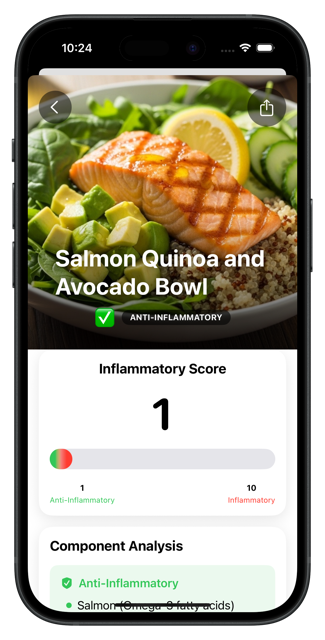
Get instant inflammation scores in your pocket
Scan any food with your camera, track your daily score, and get healthier swaps. Free on iOS & Android.


The takeaway
Pick 3-5 of these foods to add to your weekly rotation. Cumulative effects beat any single 'superfood' approach.
Educational content. Not medical advice.
Information on this page is for educational purposes only. It is not a substitute for professional medical advice, diagnosis, or treatment. Consult your healthcare provider before changing your diet, especially if you have a medical condition, take medications, or are pregnant or breastfeeding. Read the full disclaimer.
Frequently asked
What is the most anti-inflammatory food?
Fatty fish like salmon and sardines, along with leafy greens, berries, turmeric, and extra-virgin olive oil consistently rank at the top in research. None of them work alone — eating several of them across the week produces the strongest effect.
How fast do anti-inflammatory foods work?
Some markers drop within 4-6 hours after eating polyphenol-rich foods like berries or green tea. Sustained changes in chronic inflammation markers like CRP usually take 4-12 weeks of consistent dietary changes.
Can I just take supplements instead?
Whole foods almost always outperform isolated supplements because the polyphenols, fiber, vitamins, and trace minerals work synergistically. Supplements like fish oil and curcumin can complement a good diet but rarely replace it.
Scan a food in 2 seconds. Know if it's healing or hurting you.
Point your camera at any meal, ingredient, or label. Get an instant inflammation score, the science behind it, and better alternatives. All free.