Anti-inflammatory diet vs Mediterranean diet
They're 90% the same eating pattern. The differences are smaller than the internet pretends. Here's what actually separates them, what the research says, and which one to pick if you're trying to choose.
The short answer
The Mediterranean diet is an anti-inflammatory diet. The differences are about strictness, not direction. If you're lost between the two, do Mediterranean. It has more research behind it, and your friends won't roll their eyes when you order wine.
Two names for almost the same thing
Here's the thing nobody tells you. When researchers want to study an "anti-inflammatory diet," they almost always end up studying the Mediterranean diet, because that pattern has the longest track record and the most established food list. So most of the evidence you've read about anti-inflammatory eating is, technically, Mediterranean research wearing a different label.
The difference between them is mostly a matter of framing.
The Mediterranean diet is a cultural eating pattern. People in Greece, Southern Italy, and Spain have eaten this way for centuries. Olive oil, fish, vegetables, beans, whole grains, wine with dinner. It's lifestyle as much as it is food.
The anti-inflammatory diet is a modern goal-oriented framework. It says: pick foods that lower inflammation markers in your body, avoid the ones that raise them. Same foods on the list, mostly. But the framing is medical, not cultural.
Where they agree (the boring 90%)
Both diets have the same foundation. If you eat like this, both camps will nod at you.
Vegetables
Both push as much as you can eat
Fruits
Whole fruits, not juice
Fish
Fatty fish 2-3 times per week
Olive oil
Primary fat in both
Whole grains
Both encourage
Legumes
Beans, lentils, chickpeas
Nuts and seeds
Daily, small amounts
Herbs and spices
Used freely in both
Both diets also restrict
The 6 real differences
This is where they part ways. Most of the differences are about what the Mediterranean diet allows in moderation that the anti-inflammatory framework cuts harder.
| Topic | Mediterranean | Anti-Inflammatory |
|---|---|---|
| Red meat | OK in small amounts, a few times a month | Limited or avoided entirely |
| Dairy | Moderate amounts of yogurt, cheese, milk | Minimal, often plant-based alternatives |
| Refined grains | White pasta and bread are part of the culture | Mostly whole grains only |
| Wine | 1-2 glasses with dinner is traditional | Discouraged or avoided |
| Targeted spices | Mediterranean herbs (oregano, basil, parsley) | Pushes turmeric, ginger, green tea on top |
| Origin | A regional eating pattern people have eaten for centuries | A modern goal-oriented framework |
Not sure which camp a food belongs to? Scan it
Flammy gives you an inflammation score for any food, whether you're following Mediterranean, anti-inflammatory, or just trying to eat better.


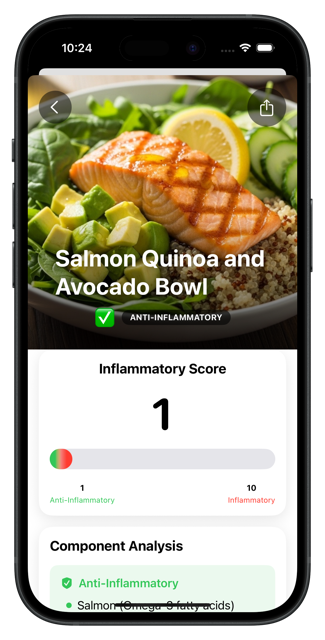

The shopping list is almost identical. The difference is what ends up in the cart once you turn the corner.
What the research actually says
The Mediterranean diet has decades of evidence behind it. The Greek ATTICA study found that people with the highest adherence had about 20% lower CRP and 17% lower IL-6 than those with the lowest. CRP and IL-6 are the two markers doctors use to measure chronic inflammation.
A 2024 meta-analysis pooling multiple randomized trials found that Mediterranean diet groups had statistically significant drops in high-sensitivity CRP, IL-6, and IL-17 compared to control diets. The benefits showed up independent of weight loss, which is important. The food itself does work, not just the calorie deficit.
The anti-inflammatory diet as a standalone protocol doesn't have its own RCT base at the same scale. Most studies under that label are studies of Mediterranean-style eating, or studies of specific foods like turmeric, ginger, or green tea in isolation.
Translation: if you want to bet on evidence, bet on Mediterranean. If you want to add a few targeted ingredients on top (turmeric, ginger, green tea), that's where the anti-inflammatory framework adds real value.
Which one should you actually do?
Skip the philosophy. Here's how to choose based on what you actually care about.
Pick Mediterranean if
- →You want the most-researched plan.
- →You enjoy pasta, bread, wine, and the occasional cheese plate.
- →You eat dairy.
- →You want to maintain the diet for years, not weeks.
- →You travel and need flexibility at restaurants.
Pick anti-inflammatory if
- →You have a specific condition: rheumatoid arthritis, IBS, psoriasis, autoimmune.
- →Stricter rules help you stay consistent. You want a clear yes/no.
- →You're dairy-sensitive or fully plant-based.
- →You like the idea of targeted ingredients (turmeric, ginger, green tea, mushrooms).
- →You don't drink alcohol.
The honest take
For 90% of people, this is a false choice. Both diets eliminate the foods causing most of your inflammation (sugary drinks, seed oils, ultra-processed snacks, excessive refined carbs) and load you up on the foods that fight it (fish, vegetables, olive oil, nuts, beans).
Pick the framework whose name motivates you to stick with it. If "Mediterranean" makes you think of long lunches in Italy, pick that. If "anti-inflammatory" makes you feel like you're doing something scientific for your body, pick that.
Whichever you pick, the actual day-to-day looks pretty much the same. Eat real food. Mostly plants. Twice-a-week fish. Olive oil on everything. No soda. That's the deal.
Stop researching, start cooking.
Where to go from here
Both paths lead to the same shopping list. Start with one of these.
Scan a food in 2 seconds. Know if it's healing or hurting you.
Point your camera at any meal, ingredient, or label. Get an instant inflammation score, the science behind it, and better alternatives. All free.