14-Day Anti-Inflammatory Meal Plan
14
Days
4
Meals / day
2000
Calories / day
Moderate
Difficulty
Two weeks is the sweet spot for anti-inflammatory eating: long enough to start moving inflammation markers, short enough to commit to without burning out. The plan below covers 14 days with no breakfast, lunch, or dinner repeated, so monotony doesn't kill the streak.
Two weeks isn't arbitrary. It's the minimum window in which biological adaptation kicks in beyond the surface-level effects you feel in week one. The gut microbiome shifts measurably toward fiber-fermenting species. Insulin sensitivity improves. Liver inflammation markers begin trending down. None of this is true on day 7.
This 14-day plan covers two non-repeating weeks. Every breakfast, lunch, and dinner is unique across the 14 days, so monotony doesn't undermine adherence. Snacks rotate through 8 options. The variety is intentional — it forces you to use a wider range of anti-inflammatory ingredients and prevents the 'I'm sick of overnight oats' moment that derails most diet plans.
If you've tried the 7-day plan and finished it, this is the natural next step. If you're starting cold, expect week 1 to be harder than the standalone 7-day plan because the recipe variety means more new dishes to learn. By week 2 it gets easier — that's true of every dietary change.
Educational content. Not medical advice.
Information on this page is for educational purposes only. It is not a substitute for professional medical advice, diagnosis, or treatment. Consult your healthcare provider before changing your diet, especially if you have a medical condition, take medications, or are pregnant or breastfeeding. Read the full disclaimer.
What this plan looks like by the numbers
Macro distribution and calorie split per meal across an average day on the plan.
Macro breakdown
25%
45%
30%
Calories by meal
Who this is for
Someone past the beginner stage who wants real results. You've tried the 7-day plan or eaten this way casually before. You're ready for variety and willing to spend a little more on grocery runs.
What to expect
- Visible reduction in bloating and water retention by week 1
- Improved skin clarity for many people by day 10
- Better workout recovery by week 2
- Measurable CRP drop if you blood-test before and after (4-8 week marker, but trends are visible by 2 weeks)
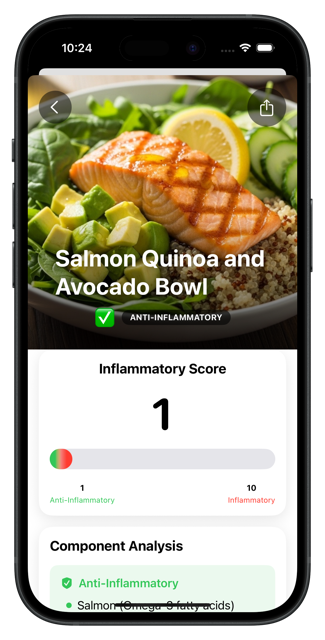
Build your own plan in the app
Scan any meal, see its inflammation score, and swap in better picks as you go.


The 14-day plan
Click any meal to see the full recipe with ingredients and instructions.
Day 1
Breakfast · Lunch · Dinner · Snack
Day 2
Breakfast · Lunch · Dinner · Snack
Day 3
Breakfast · Lunch · Dinner · Snack
Day 4
Breakfast · Lunch · Dinner · Snack
Day 5
Breakfast · Lunch · Dinner · Snack
Day 6
Breakfast · Lunch · Dinner · Snack
Day 7
Breakfast · Lunch · Dinner · Snack
Day 8
Breakfast · Lunch · Dinner · Snack
Day 9
Breakfast · Lunch · Dinner · Snack
Day 10
Breakfast · Lunch · Dinner · Snack
Day 11
Breakfast · Lunch · Dinner · Snack
Day 12
Breakfast · Lunch · Dinner · Snack
Day 13
Breakfast · Lunch · Dinner · Snack
Why this plan works
Two weeks of steady anti-inflammatory eating triggers physiological adaptations: the gut microbiome shifts toward fiber-fermenting species that produce short-chain fatty acids (the body's anti-inflammatory currency), insulin sensitivity improves measurably, and oxidative stress markers decline. None of this happens in 7 days. 14 days is where the meaningful biology kicks in.
The science
A 2014 Italian study found that 14 days of strict Mediterranean eating reduced CRP by 8-12% in healthy adults — measurable in routine bloodwork. Gut microbiome studies show meaningful shifts in microbial composition within 10-14 days of dietary change. The 14-day window is the inflection point where anti-inflammatory eating moves from subjective ('I feel better') to objective ('my labs improved').
What happens week by week
A realistic timeline of changes you can expect if you stay consistent.
Adjustment phase
Your body adapts to less refined sugar, more fiber, and a different fat profile. Some bloating during the gut transition (days 4-7) is normal.
Real biology shifts
Gut microbiome composition begins changing. Insulin sensitivity improves. Most people feel a clear cognitive 'lift' around day 10.
Past 14, now what
If you continue, expect cardiovascular markers (LDL, triglycerides) to start trending down. This is when blood-test measurable changes happen.
Sustained pattern
By 4 weeks, this is no longer a 'plan' — it's how you eat. The transition to maintenance happens here.
5 mistakes to avoid
The shortcuts that quietly break the plan, plus how to fix them.
Treating week 2 like week 1 (more variety = more decisions)
Fix: Repeat the meals from week 1 you loved most. Variety is for discovery, not obligation.
Drinking through it ('a beer is fine right?')
Fix: Daily alcohol elevates inflammation more than most realize. Save drinks for weekends, max 2 per week.
Underestimating Sunday prep
Fix: Block 90 minutes Sunday afternoon for cooking 2-3 components (grain base, roasted veg, batch protein). The plan falls apart without it.
Eating 'almost-clean' takeout when tired
Fix: Restaurant meals usually contain seed oils, sodium, and added sugars even when they look healthy. Have a freezer-stocked emergency dinner instead.
Skipping the snack 'because I'm not hungry'
Fix: If you genuinely aren't hungry, skip it. But many people skip and then crash at 4pm. Listen to actual hunger cues.
How this compares to other diets
If you're choosing between approaches, here's the honest difference.
Diet
Mediterranean diet
Similar to
Same core foods. Both use olive oil, fish, vegetables.
Different
Mediterranean is a lifelong pattern; the 14-day plan is a structured commitment with explicit recipes.
Diet
Whole30
Similar to
Both eliminate ultra-processed foods, added sugar, refined oils.
Different
Whole30 also cuts grains, legumes, and dairy. The 14-day plan keeps them — they're net anti-inflammatory in moderation.
Diet
DASH diet
Similar to
Both emphasize whole grains, lean protein, vegetables.
Different
DASH is built around blood pressure (sodium-focused). 14-day plan optimizes for inflammation specifically.
Modifications
- •Pescatarian only: swap chicken and turkey dinners for additional fish or tempeh
- •Strict vegan: replace all animal proteins with tempeh, lentils, beans, or tofu (recipes have notes)
- •Lower carb: drop oats, pancakes, and quinoa breakfasts in favor of egg-based options
Pro tips
- →Sunday batch cook 2 whole-grain bases (quinoa, brown rice) to power 4-5 lunches across the week
- →Use the freezer aggressively — soups and stews freeze well and can be the safety net for chaotic days
- →Keep a 'reset' meal you can fall back on if a day goes off the rails (the buddha bowl is mine)
Frequently asked
Is 14 days too long for a beginner?
If you've never tried this, start with the 7-day plan and graduate to this one. You're more likely to fail the 14-day cold turkey, which feels worse than just not starting.
Can I drink alcohol during this plan?
1-2 glasses of red wine per week fits the Mediterranean pattern and isn't a problem. Beer, cocktails, and daily drinking measurably increase inflammation. If you're testing the protocol seriously, save alcohol for week 2 once you've felt the baseline.
What if I cheat on day 5?
Don't restart the 14 days. Just resume on the next meal. Perfect adherence is unnecessary; the diet works on average pattern over weeks, not on day-by-day perfection.
Scan a food in 2 seconds. Know if it's healing or hurting you.
Point your camera at any meal, ingredient, or label. Get an instant inflammation score, the science behind it, and better alternatives. All free.