Gluten-Free Anti-Inflammatory Meal Plan
7
Days
4
Meals / day
1900
Calories / day
Easy
Difficulty
Gluten can drive inflammation in some people — celiac disease patients, definitely. Non-celiac gluten sensitivity, sometimes. The general population, often not. This plan removes gluten without leaning on the ultra-processed gluten-free packaged foods (which are often more inflammatory than real bread). Naturally gluten-free meals built around vegetables, fish, legumes, eggs, and quinoa.
Gluten-free eating is a medical necessity for celiac disease patients (about 1% of the population) and helpful for non-celiac gluten sensitivity (estimated 6-10%). For everyone else, the science doesn't support gluten avoidance — but cutting wheat-based ultra-processed foods (bread, pasta, pastries, crackers) often coincidentally helps because those foods are inflammation drivers regardless of gluten content.
The trap of going gluten-free is replacing wheat with packaged 'gluten-free' substitutes. Most are made with refined rice flour, tapioca starch, and sugar — they're more inflammatory than the bread they replace. This plan goes the opposite direction: gluten-free by default through whole foods (vegetables, fish, eggs, legumes, rice, quinoa). No GF cookies, no GF bread, no GF cereal substitutes.
If you have diagnosed celiac disease, this plan still requires verification: confirm any sauces, condiments, and supposedly GF oats are actually certified. Cross-contamination is the main reason celiac patients still react to 'GF' meals at restaurants. If you're testing whether you have non-celiac sensitivity, do a strict 3-week elimination, then reintroduce wheat and see what happens. That's the only way to know.
Educational content. Not medical advice.
Information on this page is for educational purposes only. It is not a substitute for professional medical advice, diagnosis, or treatment. Consult your healthcare provider before changing your diet, especially if you have a medical condition, take medications, or are pregnant or breastfeeding. Read the full disclaimer.
What this plan looks like by the numbers
Macro distribution and calorie split per meal across an average day on the plan.
Macro breakdown
22%
48%
30%
Calories by meal
Who this is for
Celiac disease patients, people with diagnosed gluten sensitivity, and curious eaters who want to test whether gluten affects them.
What to expect
- Reduced bloating in 3-5 days (the most common gluten-related complaint)
- Improved skin clarity for some — especially eczema or rosacea sufferers
- Better focus and less brain fog if you were sensitive without knowing
- If you don't notice anything in 3 weeks, gluten probably isn't your issue
Build your own plan in the app
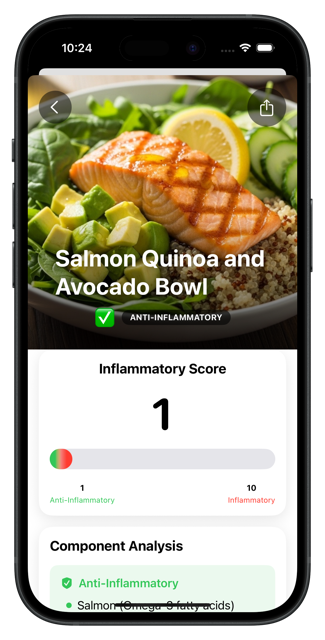
Scan any meal, see its inflammation score, and swap in better picks as you go.


The 7-day plan
Click any meal to see the full recipe with ingredients and instructions.
Day 1
Breakfast · Lunch · Dinner · Snack
Day 2
Breakfast · Lunch · Dinner · Snack
Day 3
Breakfast · Lunch · Dinner · Snack
Day 4
Breakfast · Lunch · Dinner · Snack
Day 5
Breakfast · Lunch · Dinner · Snack
Day 6
Breakfast · Lunch · Dinner · Snack
Why this plan works
For celiac, gluten triggers an autoimmune attack on intestinal villi — removing it is medically necessary. For non-celiac sensitivity, the mechanism is less clear but inflammation markers do drop in some people. For everyone else, ditching gluten often coincidentally removes ultra-processed wheat foods (bread, pasta, pastries, crackers) which were the real inflammation drivers.
The science
Celiac disease is autoimmune; gluten avoidance is medically necessary and reduces intestinal villi inflammation within weeks. Non-celiac gluten sensitivity is more debated — some trials show clear symptom improvement with gluten avoidance in sensitive individuals, others find FODMAPs (not gluten) are the trigger. For the general population, no rigorous evidence supports universal gluten avoidance. The benefits people report often come from removing ultra-processed wheat foods, not gluten itself.
What happens week by week
A realistic timeline of changes you can expect if you stay consistent.
Withdrawal phase (if sensitive)
Some people experience headaches and fatigue days 2-4 as the body adjusts. Bloating typically reduces by day 5.
Symptom reduction
If gluten was your issue, brain fog clears, energy stabilizes, GI symptoms improve. If you're a 'gluten doesn't affect me' eater, you'll mainly notice less bloat from cutting refined wheat.
Decision point
If you've stuck strict and feel dramatically better, you have your answer. If you don't notice anything, gluten probably isn't your issue.
Reintroduction test
If symptoms returned strongly when you tried gluten in week 4, your body has spoken. If nothing changed, eat freely. This is the experiment most people skip.
5 mistakes to avoid
The shortcuts that quietly break the plan, plus how to fix them.
Buying gluten-free packaged junk food
Fix: GF cookies, GF bread, GF cereal — most are more inflammatory than the wheat originals. Stick to whole foods that are naturally GF.
Ignoring soy sauce and condiments
Fix: Soy sauce contains gluten. Sub coconut aminos or tamari (most tamari is GF — check label). Many salad dressings, marinades, and sauces hide gluten too.
Trusting 'GF' on restaurant menus
Fix: Cross-contamination from shared fryers, cutting boards, and pasta water is rampant. Ask explicitly about preparation if you have celiac.
Going GF without testing for celiac first
Fix: If you suspect celiac, get tested BEFORE going gluten-free. Tests require gluten in your system. Going GF first then testing gives false negatives.
Forgetting hidden gluten
Fix: Beer, malt vinegar, modified food starch (sometimes), some medications, communion wafers. Hidden gluten ruins celiac response curves.
How this compares to other diets
If you're choosing between approaches, here's the honest difference.
Diet
AIP (Autoimmune Protocol)
Similar to
Both eliminate gluten.
Different
AIP also removes grains, legumes, dairy, eggs, nightshades, and nuts/seeds. GF is much less restrictive.
Diet
FODMAP elimination
Similar to
Both can help GI symptoms.
Different
FODMAP targets fermentable carbs (different from gluten). For some people, the GI improvement on GF was actually FODMAPs all along.
Diet
Paleo
Similar to
Paleo is naturally gluten-free.
Different
Paleo also cuts all grains and legumes. GF allows rice, quinoa, oats, beans — much broader.
Modifications
- •Skip oats if you have celiac — even certified GF oats trigger some patients
- •Replace any wraps in lunches with lettuce wraps or a bowl format
- •Watch out for soy sauce in stir-fries — sub coconut aminos or tamari (GF)
Pro tips
- →Don't replace gluten foods with packaged GF replicas (GF bread, GF cookies). They're often more processed than the original
- →Naturally GF whole foods are usually anti-inflammatory by default: vegetables, fruits, eggs, fish, meat, legumes, rice, quinoa
- →Eating out: fish, salad, and rice are usually safe. Always confirm with the kitchen if you have celiac.
Frequently asked
Should I go gluten-free if I don't have celiac?
Test it for 3 weeks. If you notice clear improvement (bloating, skin, focus, energy), you may be sensitive. If you notice nothing, gluten isn't your issue and you don't need to keep avoiding it.
Are oats gluten-free?
Pure oats are naturally GF, but most commercial oats are cross-contaminated. Look for 'certified gluten-free' on the label. Celiac patients should still discuss oats with their doctor — some don't tolerate even certified GF oats.
Scan a food in 2 seconds. Know if it's healing or hurting you.
Point your camera at any meal, ingredient, or label. Get an instant inflammation score, the science behind it, and better alternatives. All free.