Anti-Inflammatory Meal Plan for Beginners
7
Days
4
Meals / day
1750
Calories / day
Easy
Difficulty
Anti-inflammatory eating has a reputation for being expensive and complicated. It doesn't have to be. This plan keeps every meal under 30 minutes and uses ingredients from any supermarket. You don't need turmeric paste from a specialty store. You need salmon, eggs, oats, vegetables, and olive oil.
There's a reason most people who try anti-inflammatory eating quit by week two: the recipes look like they were designed for someone with a fully-stocked specialty pantry and an hour to spare per meal. Acai bowls with bee pollen, salmon glazed with miso paste from Japan, kale massaged for ten minutes. Real life doesn't work that way.
This beginner plan strips out everything optional. No ingredient costs more than $5 a serving. No recipe requires a technique you'd need to look up. Every meal can be on the table in under 30 minutes including cleanup. The whole point is to make the diet sustainable for someone who has not previously enjoyed cooking — because that's most people.
The trade-off is variety. You'll repeat 3-4 breakfasts across the week. You'll eat a Greek salad more than once. That's intentional. Variety is what makes diet plans look beautiful on Instagram and what kills adherence in real kitchens. Pick three things you like, eat them on rotation, watch the inflammation drop.
Educational content. Not medical advice.
Information on this page is for educational purposes only. It is not a substitute for professional medical advice, diagnosis, or treatment. Consult your healthcare provider before changing your diet, especially if you have a medical condition, take medications, or are pregnant or breastfeeding. Read the full disclaimer.
What this plan looks like by the numbers
Macro distribution and calorie split per meal across an average day on the plan.
Macro breakdown
22%
48%
30%
Calories by meal
Who this is for
True beginners. You've never followed a structured diet, you don't enjoy cooking complex things, and you want results without overhauling your life.
What to expect
- Less brain fog by day 4
- Stable energy across the day, no afternoon crash
- Realistic eating you can actually maintain
- Confidence to extend the plan into week 2
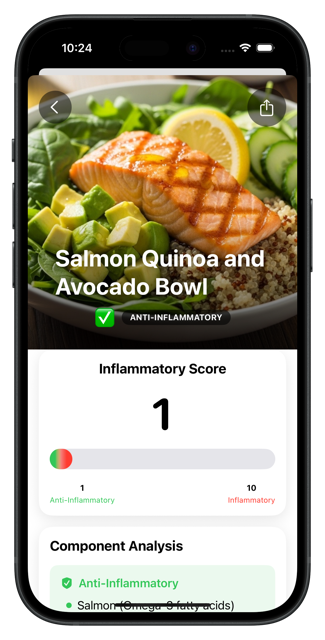
Build your own plan in the app
Scan any meal, see its inflammation score, and swap in better picks as you go.


The 7-day plan
Click any meal to see the full recipe with ingredients and instructions.
Day 1
Breakfast · Lunch · Dinner · Snack
Day 2
Breakfast · Lunch · Dinner · Snack
Day 3
Breakfast · Lunch · Dinner · Snack
Day 4
Breakfast · Lunch · Dinner · Snack
Day 5
Breakfast · Lunch · Dinner · Snack
Day 6
Breakfast · Lunch · Dinner · Snack
Why this plan works
The hard part of any diet isn't the food, it's the consistency. This plan removes complexity at every level: ingredient list, cook time, decision count. Every meal is something you'd recognize from a normal meal at a healthy friend's house. There's no quinoa-cauliflower-spirulina-buckwheat acrobatics.
The science
Adherence research consistently shows that simpler dietary plans with fewer unique recipes have higher 6-month adherence rates than 'variety-rich' plans. A 2018 review in the American Journal of Clinical Nutrition found that diet adherence — not specific composition — is the strongest predictor of long-term outcomes. Beginners who repeat meals stay on plans longer than those who try to cook something new every day.
What happens week by week
A realistic timeline of changes you can expect if you stay consistent.
Foundation week
You're not optimizing yet — you're just learning the rhythm. Some meals won't be perfect. That's fine. The metric is adherence, not flavor.
It clicks
Cooking the same meals second time is dramatically faster. You start having opinions ('next time, more lemon'). This is the sign you're going to last.
First real wins
You feel different. Energy is steadier, sleep is better, clothes fit slightly looser. The diet starts feeling worth the effort.
Habit formed
After 28 days, eating this way is more habit than choice. You can start adding variety without losing the structure.
5 mistakes to avoid
The shortcuts that quietly break the plan, plus how to fix them.
Trying every recipe in the library at once
Fix: Pick 5-6 recipes you like. Repeat them. Add new ones only after you're consistent for 2 weeks.
Buying specialty ingredients (turmeric paste, golden milk powder)
Fix: Plain whole foods (turmeric powder, fresh ginger, basic oats) work just as well. Skip the upsells.
Counting calories and macros from day one
Fix: Just hit the meals first. Tracking comes later (or never — many people don't need it).
Going to the grocery store hungry
Fix: Eat first, list in hand. Hungry shopping is how cookies end up in the cart.
Quitting after one bad day
Fix: One bad day doesn't undo seven good ones. Resume on the next meal, not the next Monday.
How this compares to other diets
If you're choosing between approaches, here's the honest difference.
Diet
Whole30
Similar to
Both are 'reset' approaches to clean up eating.
Different
Whole30 is much stricter (no grains, legumes, dairy, sugar at all). Beginner plan is forgiving — small slips don't break it.
Diet
Keto for beginners
Similar to
Both promise weight loss and inflammation reduction.
Different
Keto requires cutting carbs to under 50g/day, which is hard. Anti-inflammatory eating allows oats, sweet potato, beans — far more sustainable.
Diet
Intuitive eating
Similar to
Both reject crash dieting and calorie obsession.
Different
Intuitive eating gives no structure. The beginner plan provides structure as scaffolding while you build the habit.
Modifications
- •Hate eggs: swap turmeric eggs for an extra serving of yogurt parfait or oatmeal
- •On a tight budget: substitute canned salmon or sardines for fresh fillets (just as anti-inflammatory)
- •Low time: use rotisserie chicken across 2-3 lunches/dinners instead of cooking from scratch
Pro tips
- →Repeat meals you like — variety is overrated for beginners; consistency is everything
- →Don't buy turmeric paste, golden milk powder, or any 'starter pack' supplement. Just food.
- →Stop tracking calories the first week. Focus only on hitting the meals.
Frequently asked
What's the easiest anti-inflammatory breakfast?
Overnight oats. 5 minutes of prep the night before, ready to eat in the morning, and it hits omega-3s (chia), polyphenols (berries), fiber, and slow carbs all at once. Hard to beat.
I don't have time to cook. Is this still doable?
Yes. 4 of the 7 dinner recipes can be replaced with frozen wild salmon (heated 8 minutes) plus pre-cut frozen vegetables. The plan is the structure; the recipes are upgrades.
Scan a food in 2 seconds. Know if it's healing or hurting you.
Point your camera at any meal, ingredient, or label. Get an instant inflammation score, the science behind it, and better alternatives. All free.