Anti-inflammatory tea: 9 teas, ranked by how much the evidence backs them
Every tea brand now prints "anti-inflammatory" on the box. Some of those claims rest on decades of research, some on one lab study, and some on nothing. This page sorts nine common teas into three tiers by how much real evidence sits behind them, with caffeine for each so you know which to drink at 9 p.m.
The short version: green tea and matcha lead, ginger and turmeric are the best caffeine-free picks, and the rest are fine drinks with weaker claims. Whatever you pick, the sugar you add matters more than the leaf.
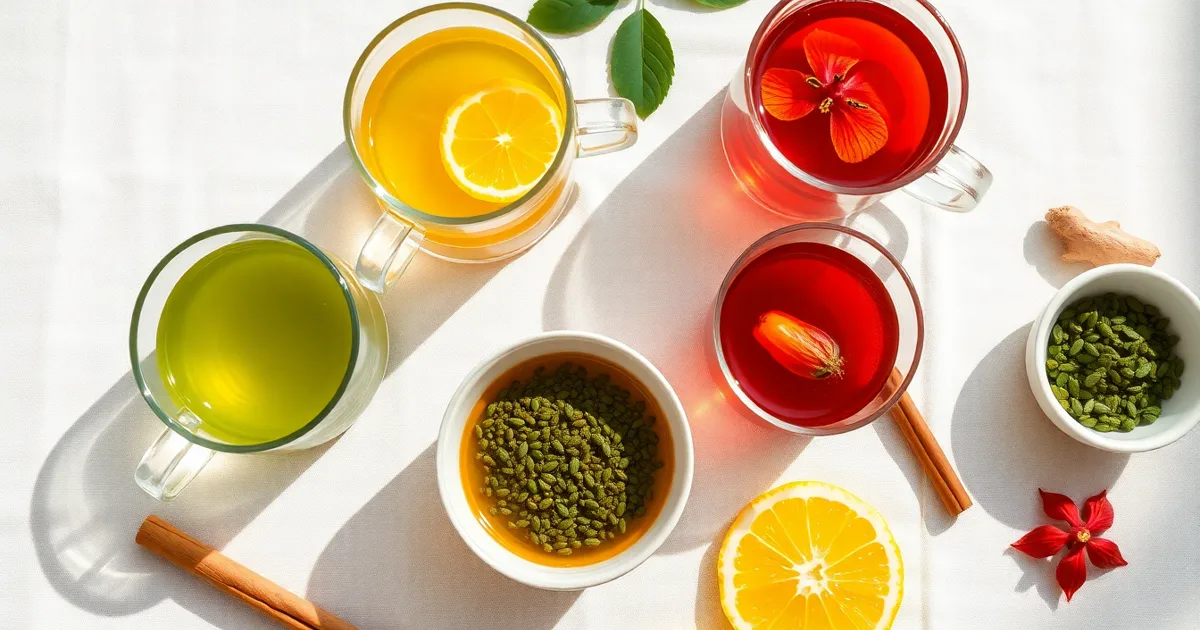
The ranking at a glance
Tier A: strong research base. Tier B: some evidence or an indirect link. Tier C: pleasant, little inflammation data.
| Tier | Tea | Key compound | Caffeine |
|---|---|---|---|
| A | Green tea | Catechins, mainly EGCG | About 28 mg per 8 oz |
| A | Matcha | Catechins (you drink the whole leaf) | More than brewed green tea |
| A | Ginger tea | Gingerols, shogaols | None |
| A | Turmeric tea | Curcumin | None |
| B | Black tea | Theaflavins, catechins | About 47 mg per 8 oz |
| B | Hibiscus | Anthocyanins | None |
| B | Chamomile | Apigenin (a flavone) | None |
| C | Rooibos | Aspalathin | None |
| C | Peppermint | Menthol, rosmarinic acid | None |
What the evidence says, tea by tea
Green tea
Tier AFlammy score 1/10The most studied tea for inflammation. Green and black tea are one of the 45 parameters in the Dietary Inflammatory Index, on the anti-inflammatory side.
Matcha
Tier AFlammy score 1/10Same plant as green tea, ground and whisked, so you consume the leaf instead of an infusion of it.
Ginger tea
Tier AFlammy score 1/10Ginger has a large body of research on inflammatory markers and is one of the spices scored in the DII.
Turmeric tea
Tier AFlammy score 1/10Curcumin is poorly absorbed alone. In a 1998 human study (Shoba et al., Planta Medica), adding piperine from black pepper raised its bioavailability by about 2,000%. Add a pinch of pepper.
Black tea
Tier BSame plant as green tea, oxidized. Counted with green tea in the DII. Fine as your daily tea; skip the sugar.
Hibiscus
Tier BMost of its research is on blood pressure rather than inflammation markers. A good caffeine-free evening option.
Chamomile
Tier BStudied mostly for sleep and relaxation. Flavones are an anti-inflammatory parameter in the DII, but direct human data on chamomile is thin.
Rooibos
Tier CAntioxidant compounds, little human research on inflammation. Drink it because you like it.
Peppermint
Tier CBetter known for digestion. Not much evidence on inflammation specifically.
Free · iOS & Android
Tea is easy. The rest of the plate is harder.
Photograph any food or meal and Flammy scores it from 1 to 10 for inflammation, with the ingredients behind the score. Free on iOS and Android.


How to brew so you actually get the good part
| Tea | Water | Steep | Tip |
|---|---|---|---|
| Green | Hot, not boiling (about 175°F / 80°C) | 2 to 3 min | Boiling water and long steeps make it bitter, which pushes people to add sugar. |
| Matcha | About 175°F / 80°C | Whisk, no steep | Half a teaspoon in a small amount of water, whisk, then top up. |
| Black | Boiling | 3 to 5 min | Milk is fine. Sugar is the problem. |
| Ginger | Boiling | 10 min, covered | Use sliced fresh root, about 1 inch per cup. Covering keeps the aromatic compounds in. |
| Turmeric | Boiling | 10 min | Add a pinch of black pepper and a little fat (a splash of milk) for absorption. |
| Hibiscus, chamomile, rooibos, peppermint | Boiling | 5 to 7 min | Caffeine-free: the evening options. |
What turns a good tea into a bad drink
The leaf is rarely the problem. What goes in with it is. White sugar scores 10 on our scale, the worst score we give, and a bottled sweet tea or a café chai latte can carry more of it than a can of soda. A matcha latte with flavored syrup is a dessert with some matcha in it.
If you need sweetness, a small spoon of raw honey (4 out of 10) is better than sugar, and cinnamon (2) adds the impression of sweetness with none of the sugar. Our sugar vs honey comparison has the detail, and matcha vs green tea and coffee vs green tea settle the two most common swaps.
A cup of tea is not a green tea pill
Brewed tea and concentrated extracts are different products. The US National Center for Complementary and Integrative Health notes that rare cases of liver injury have been linked to green tea extract supplements, not to green tea as a drink. The same logic applies to turmeric capsules, which deliver far more curcumin than any cup.
For a diet, the drink is the point: a few cups a day replace soda, juice or sweetened coffee, and that swap alone removes a large share of added sugar for many people. If you are considering an extract or capsule, especially alongside prescription medication, ask your doctor or pharmacist first.
A daily tea routine that covers the bases
| Morning | Green tea or matcha, no sugar |
| Early afternoon | Black or green tea if you want a second caffeine hit |
| After lunch | Fresh ginger tea |
| Evening | Turmeric tea with black pepper, or chamomile or hibiscus |
For a warm, milky version of the evening option, our turmeric golden milk recipe already includes the pepper. More drinks, ranked, are on the anti-inflammatory drinks list.
Anti-inflammatory tea: common questions
Does adding milk cancel the benefits of tea?
Studies disagree, and none settle it for everyday drinking. If you like milk in black tea, keep it. The addition that clearly works against you is sugar or flavored syrup, not a splash of milk.
What is the best anti-inflammatory tea?
Green tea has the most research behind it, thanks to its catechins (mainly EGCG), and matcha delivers the same compounds from the whole leaf. For a caffeine-free option, ginger or turmeric tea with a pinch of black pepper.
Is green tea anti-inflammatory?
Yes, it is the best-studied tea for it. Green and black tea are one of the 45 parameters in the Dietary Inflammatory Index, scored on the anti-inflammatory side. Green tea scores 1 out of 10 on our scale.
Does turmeric tea work without black pepper?
Curcumin, the active compound, is poorly absorbed on its own. A 1998 human study found that piperine from black pepper increased curcumin bioavailability by about 2,000%. A pinch of pepper in turmeric tea is worth it.
How much caffeine is in green tea vs black tea?
Mayo Clinic lists about 28 mg per 8 oz cup of brewed green tea and about 47 mg for black tea, against roughly 95 mg for brewed coffee. Herbal teas like ginger, turmeric, hibiscus, chamomile, rooibos and peppermint have none.
Is bottled iced tea anti-inflammatory?
Usually not. Sweetened bottled teas carry a lot of added sugar, and white sugar scores 10 out of 10 on our scale. Brew your own and chill it, or buy unsweetened.
How many cups of tea a day?
There is no inflammation-specific number. Watch caffeine if you drink green, black or matcha late in the day, and keep herbal teas for the evening.
Scan a food in 2 seconds. Know if it's healing or hurting you.
Point your camera at any meal, ingredient, or label. Get an instant inflammation score, the science behind it, and better alternatives. All free.