Anti-Inflammatory Drinks: 12 Beverages That Reduce Inflammation
2
Items
2/10
Avg score
Green Tea
Top pick
What you drink moves inflammation markers as fast as what you eat — sometimes faster. Polyphenol-rich teas, broths, and fermented beverages can hit your bloodstream within hours.
Single-ingredient drinks
Brewed and prepared simply, no recipe needed.
The science
Green tea, ginger tea, and bone broth lead the evidence base. Coffee in moderation (3-4 cups/day) is also anti-inflammatory thanks to its polyphenols, despite its caffeine. Plant milks fortified with omega-3s and herbal teas (chamomile, peppermint, hibiscus) round out a solid daily lineup.
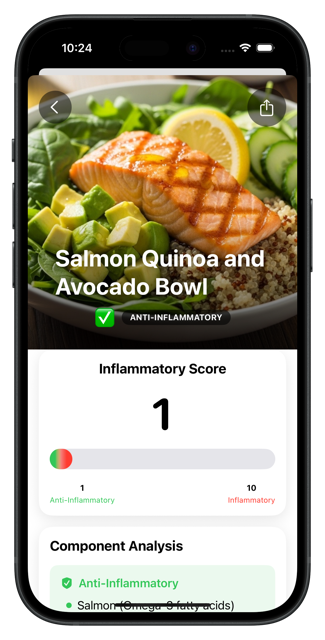
Get instant inflammation scores in your pocket
Scan any food with your camera, track your daily score, and get healthier swaps. Free on iOS & Android.


The takeaway
Replace one sweetened drink per day with green tea or water with lemon. That single swap measurably moves inflammation markers within weeks.
Educational content. Not medical advice.
Information on this page is for educational purposes only. It is not a substitute for professional medical advice, diagnosis, or treatment. Consult your healthcare provider before changing your diet, especially if you have a medical condition, take medications, or are pregnant or breastfeeding. Read the full disclaimer.
Frequently asked
What is the most anti-inflammatory drink?
Green tea consistently ranks highest in research thanks to EGCG, a polyphenol that lowers multiple inflammation markers. Turmeric latte ('golden milk') is a close second when made with black pepper to boost curcumin absorption.
Is coffee inflammatory?
No — moderate coffee (3-4 cups/day) is mildly anti-inflammatory in most studies, thanks to chlorogenic acid and other polyphenols. Drinking it black or with minimal sugar is key. Loading it with sweetened creamers can flip the balance.
Should I drink celery juice every morning?
Skip the trend. Celery is mildly anti-inflammatory but no single 'morning ritual' juice has stronger evidence than just eating colorful vegetables and drinking green tea consistently.
Scan a food in 2 seconds. Know if it's healing or hurting you.
Point your camera at any meal, ingredient, or label. Get an instant inflammation score, the science behind it, and better alternatives. All free.